
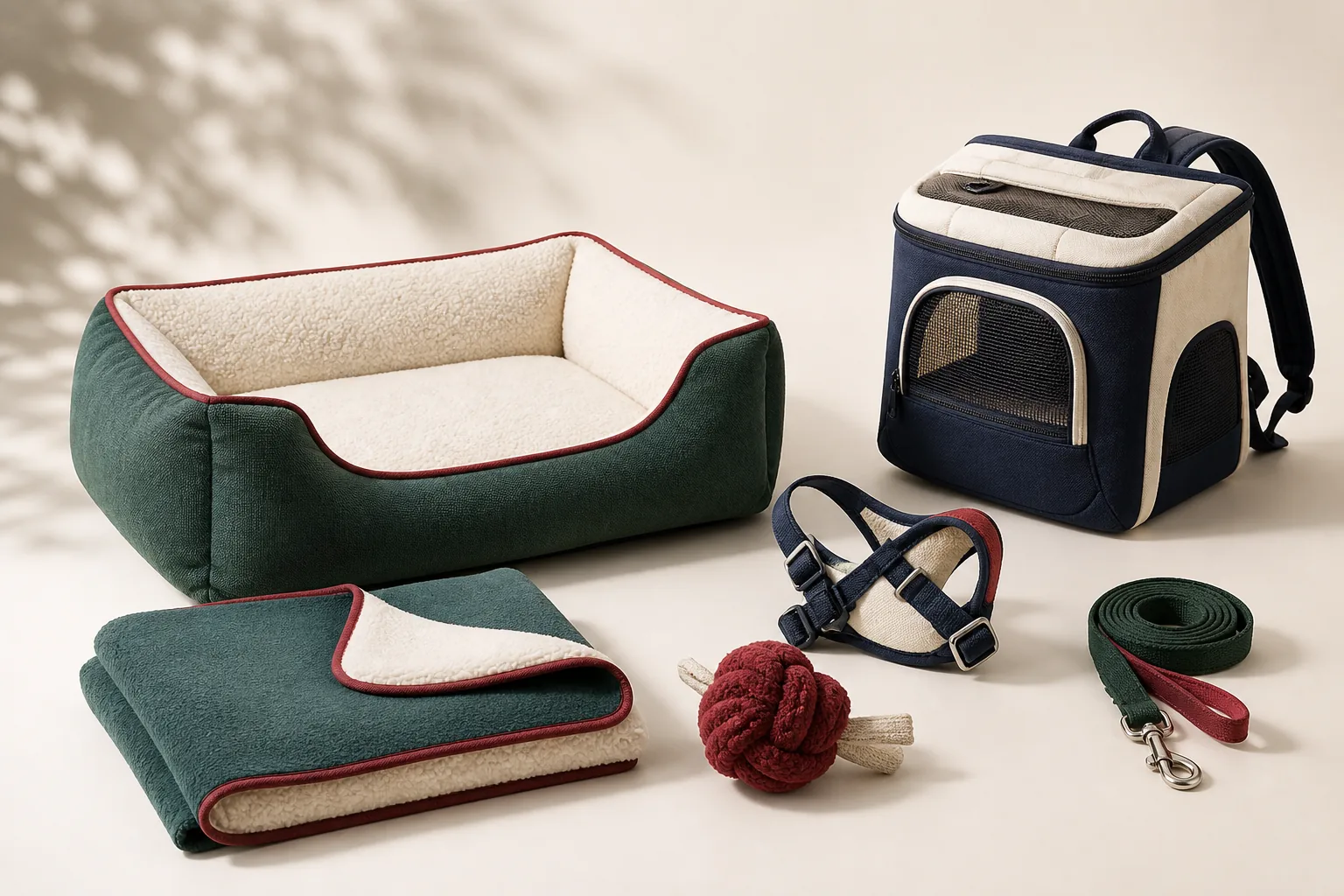
Two suppliers can quote a pet carrier from the same photograph and propose different products. The picture leaves decisions open about the shell, lining, base, opening, handle attachments and cleaning instructions. A useful brief turns those decisions into a drawing, a component list and checks that can be applied to an identifiable sample.
Start with the intended use and the claims the buyer expects to make. Specify the carrying configuration, intended pet size range, dimensions to be measured, loading conditions to be evaluated and cleaning method. Treat each proposed performance claim as an open requirement until its evidence has been reviewed. This worksheet does not establish a safe load, animal suitability or acceptance by an airline.
Draw the construction as well as the outline
For a development discussion, mark the shell panels, lining, mesh, padding, base insert, closures, webbing and attachment points. Give each proposed component a reference and document revision. Record which parts are removable and which are sewn into the assembly.
Then mark how the handle or shoulder strap attaches to the body and where the base is supported. This drawing is a way to identify the construction that needs evaluation. It is not a strength calculation or evidence that the carrier can contain an animal safely.
Ask the supplier to identify what is included in the quotation: fabric specification, lining, base material, closure model, webbing, hardware, sewing details and any finishing operation. Leave an unresolved item visible rather than allowing a photograph to stand in for a specification.
For sewing details, request the proposed thread reference, thread size system, stitch type, stitch density and seam allowance for the identified panel assembly. Coats explains that a commercial thread ticket number can mean different sizes in different thread types. Ask for an identifiable size such as tex alongside the supplier reference; a bare ticket number is a weak basis for comparing sewing proposals. Coats thread numbering guide
Give the zipper a component reference and an installation review
YKK's official strength guidance describes separate tests for zipper elements, stops, sliders and locking performance. Its sewing guidance explains that stitching close to the elements and lining in the slider path can interfere with opening and closing; clearance depends on the configuration. YKK strength guidance · YKK sewing guidance
Our procurement recommendation is to review both the proposed component evidence and its operation in the actual sewn sample. A component report alone cannot resolve an installation question. These general references do not identify the parts used in a MEGATECH carrier.
On the sample record, note the zipper reference, sample revision, where any snag occurs, the associated lining or seam and the proposed correction. Agree how to recheck the changed assembly. Do not copy a universal sewing clearance or cycle count into the brief without a basis for that particular construction and evaluation.
Use one worksheet for the quotation and the sample review
The following fields are proposed project records. Checks and acceptance criteria must be agreed for the intended product; the table is not a test standard.
| Decision | Record in the brief | Evidence or decision still needed |
|---|---|---|
| Intended use and claims | Carrying configuration, intended size range, target market and proposed claims | Who evaluates suitability, loading and any stated performance? |
| Dimensions | Drawing revision, measurement locations and proposed tolerances | Does the identified sample match the agreed drawing? |
| Components | Shell, lining, mesh, padding, base, zipper, webbing and hardware references | Which exact items are quoted and represented by the sample? |
| Sewn construction | Panel layout, attachment drawings, seam details and finishing | Which assembly details need inspection or testing? |
| Closure operation | Zipper reference, opening layout and sample observations | Where is interference observed, and how will a change be rechecked? |
| Cleaning and maintenance | Removable parts and proposed cleaning instructions | What evaluation supports those instructions for the complete assembly? |
| Release decision | Sample identifier, open issues, approver and decision date | Is this revision approved, conditional or on hold? |
Close changes against the same reference
Suppose a revised sample uses a different lining or a new zipper. Record the changed component and drawing revision before comparing it with the earlier sample. Decide which inspections and evaluations must be repeated, and record the result against the new identifier. Approval of one version does not silently approve later substitutions.
Keep the approved drawing, component references, issue list and decision together. They give the buyer and supplier a common point of reference when the quotation or sample changes. Photographs can help locate an issue, but they do not replace the agreed measurements or supporting results.
For a sourcing discussion, our soft-sided carrier reference page and carrier backpack reference page provide starting points for a brief. Bring the intended use, drawing and unresolved construction questions. Discuss a carrier development brief with MEGATECH. Product-specific materials and performance remain subject to confirmation.